The Japanese playwright-director brings his original production to Korea for the first time, exploring the human cost of Hollywood's communist blacklist
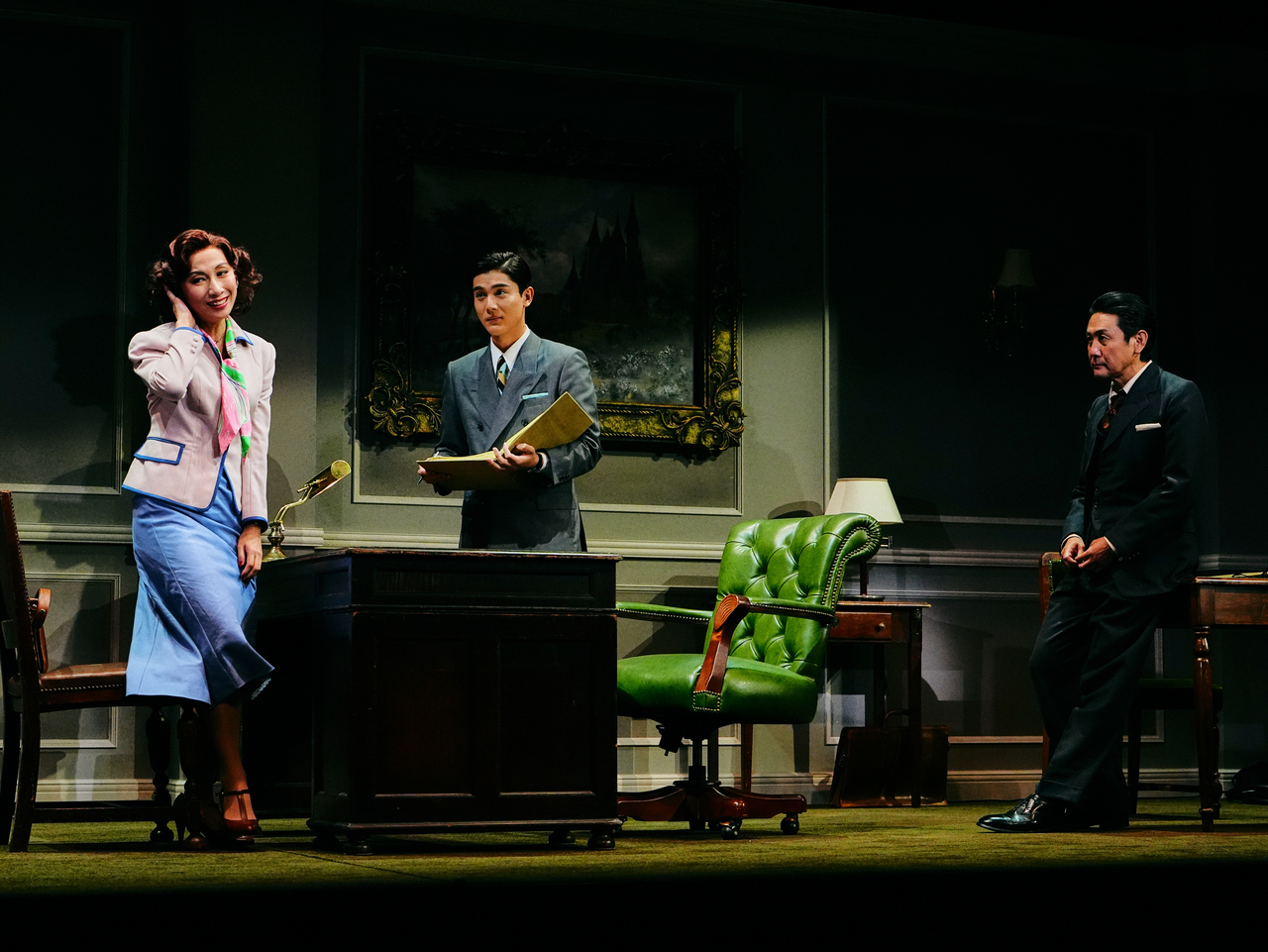
“American Dream,” the latest play by Japanese playwright-director Koki Mitani, takes its cue from a speech Dalton Trumbo, the screenwriter blacklisted during Hollywood’s Red Scare, gave in 1970: “It will do no good to search for villains or heroes or saints or devils because there were none; there were only victims.”
The line sets the terms for the production, staged at Coex Artium from Friday to Sunday, as the final stop of its tour. It was the first of Mitani’s works to be performed in Korea in Japanese by its original cast. His plays have long been staged here and are familiar to Korean audiences, so it seemed natural to bring the new work to Seoul as well, according to Parco.
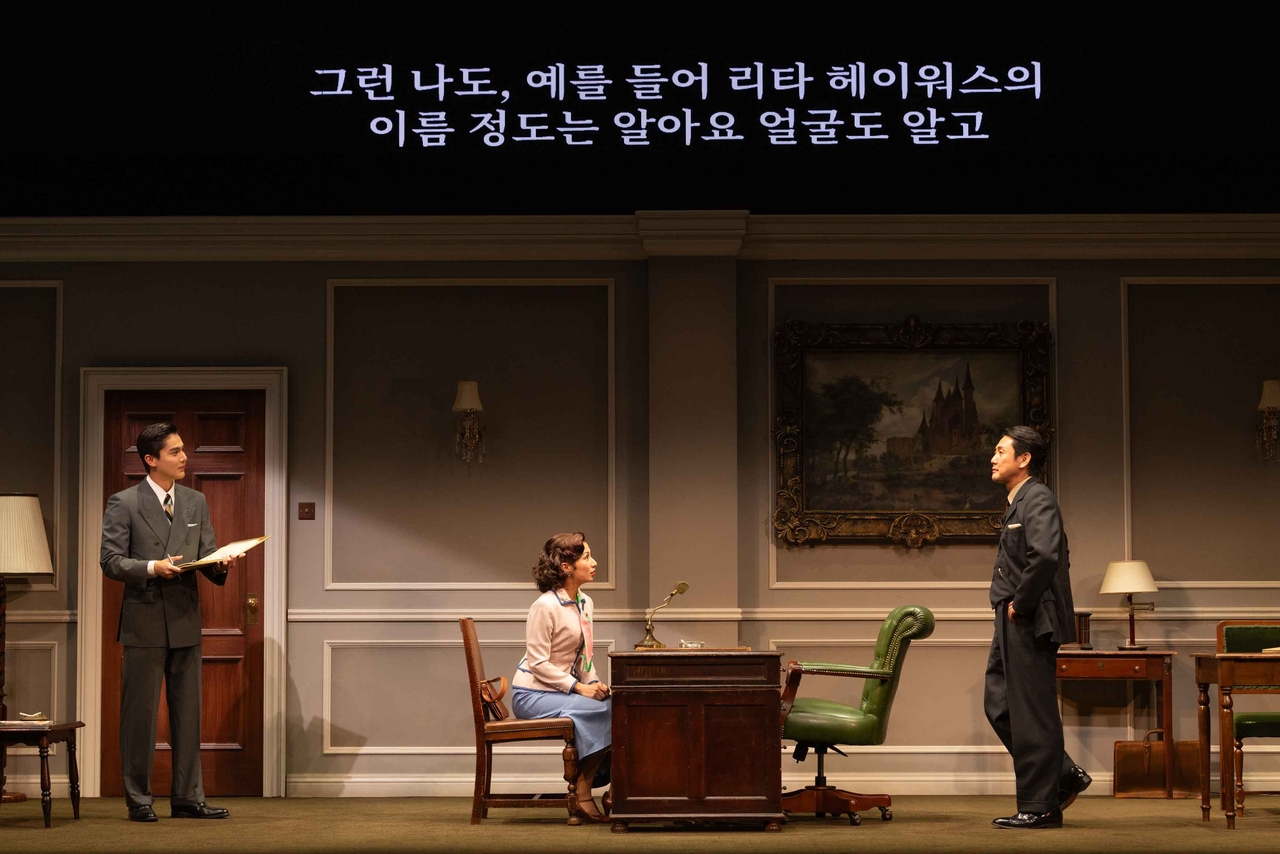
In the play, four film people face interrogation over alleged communist ties. Mitani said he studied how Hollywood figures targeted in the Red Scare responded and sorted their reactions into four patterns — some held out to the end, others informed on colleagues — then built one character from each.
The figure he most wanted to portray, he said, was not one of the era’s famous screenwriters or directors but an uncredited actor whose name survives nowhere. “They fought in their own way, too,” he told reporters in Seoul Friday.

Mitani, best known in Korea for “The Last Laugh,” his comedy about a playwright and a wartime censor, said that he does not write plays to make political points. “If I wanted to deliver that kind of message, I would have become a politician,” he said.
His starting point, he said, was the actors: He asked what material would let performers he admires use 100 percent of their skill, and landed on the Red Scare, a subject long on his mind.
Still, asked what separates the new work from the comedy he wrote some 30 years ago, he offered a measured observation: Society has become a little — he stressed, only a little — less free to speak.
“‘The Last Laugh’ is a comedy and a fantasy,” he said. “American Dream,” by contrast, is realistic, its characters’ troubles still current in Japan today.
The pressure is not only political. Mitani said he has always worked against smaller powers, from producers to production companies and now social media. “Internet society is a very big power,” he said.
He judged the subject wrong for comedy and set out to stage it straight, but a month of rehearsals with his cast pulled him back toward laughs.
Comedy, for Mitani, is personal. On his darkest days as a young man, he said, he happened to watch “Mr. Bean” on TV and realized how small his troubles were. Had it been “The Godfather,” he added, he might not be here. If the world keeps moving in its current direction, making comedy becomes all the more his job, he added.
Mitani said he has watched Korean productions of his plays from the audience several times and found that Korean viewers laugh at the same moments Japanese ones do, sometimes harder. Bringing a Japanese cast here was his second step, he said. “So what would the third be? I think it would be making a comedy here in Korea, together with Korean actors,” he said.
gypark@heraldcorp.com